In January, the Albany Community Center began to fill with maps, photographs, documents, and fragments of family history. Letters. Passports. Wedding photos. School portraits. Recipes.
Together, these materials formed the exhibition “Journeys to Albany: Paths to Belonging,” a community storytelling project inviting Albany residents to share how their families arrived here—and what it has meant to make a life in this small, dense, beautifully complicated city by the bay.
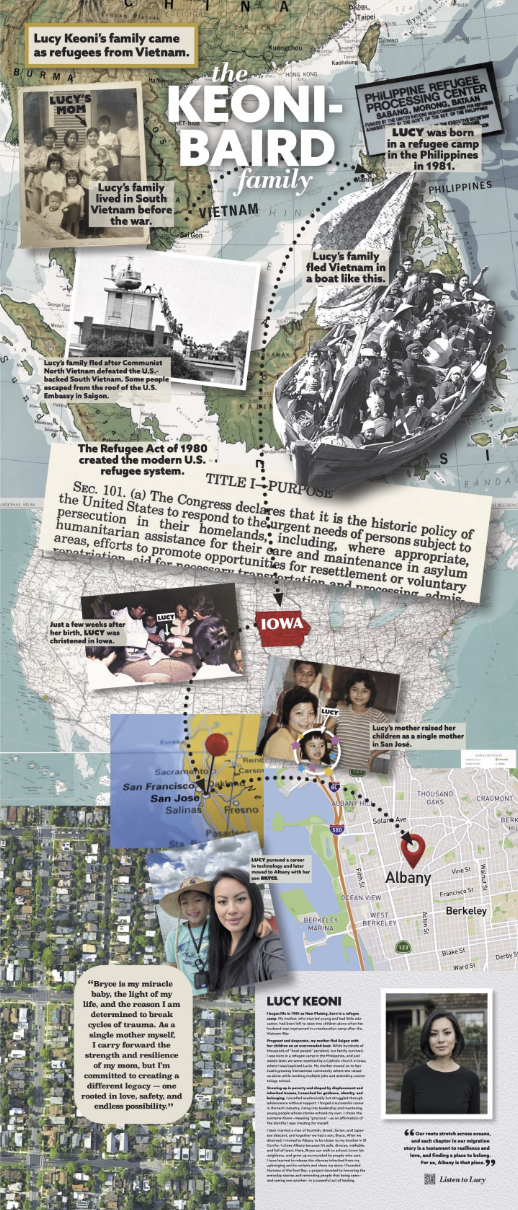
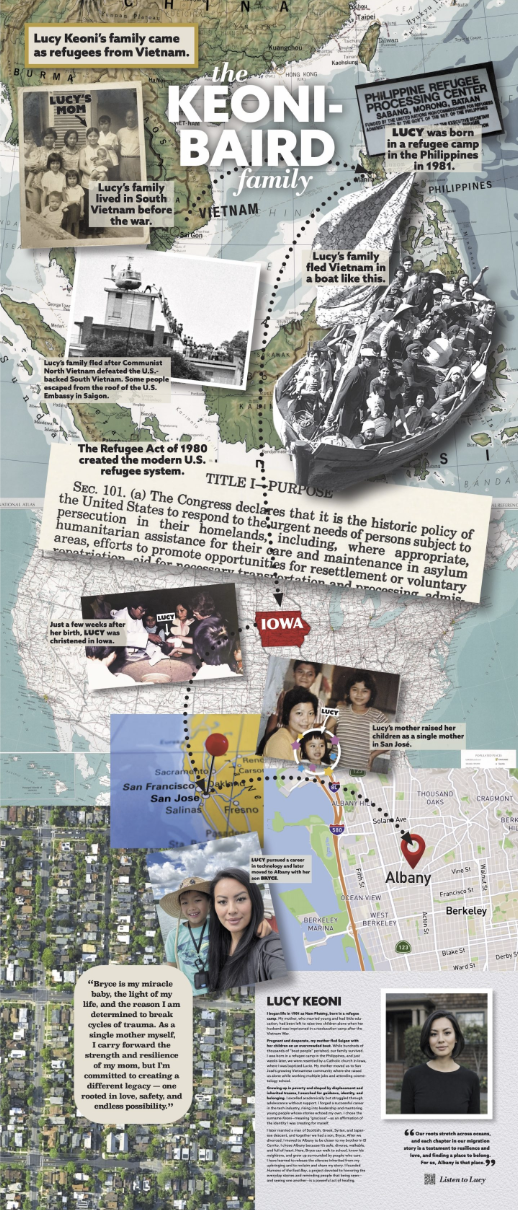
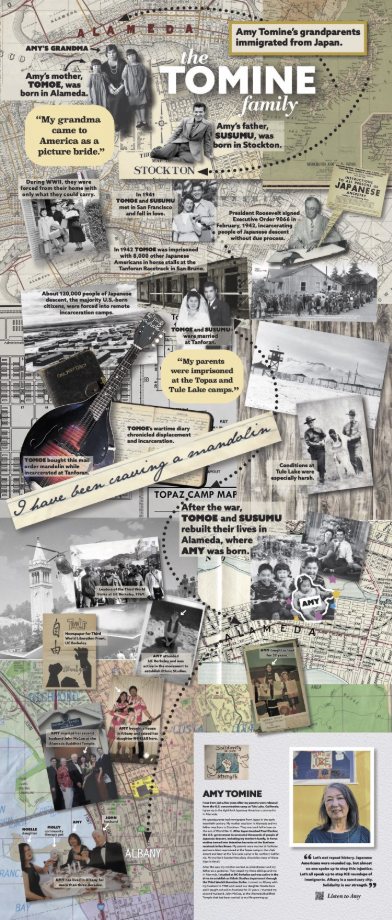
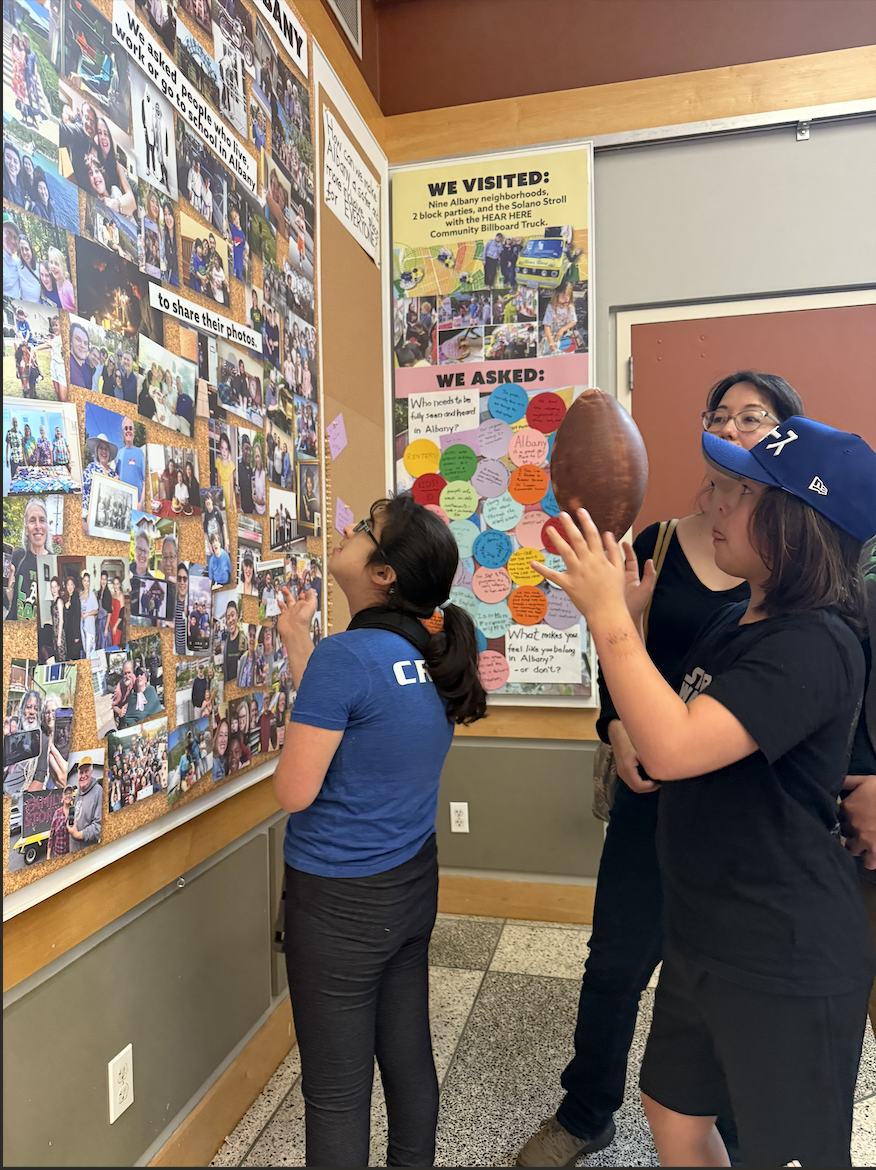
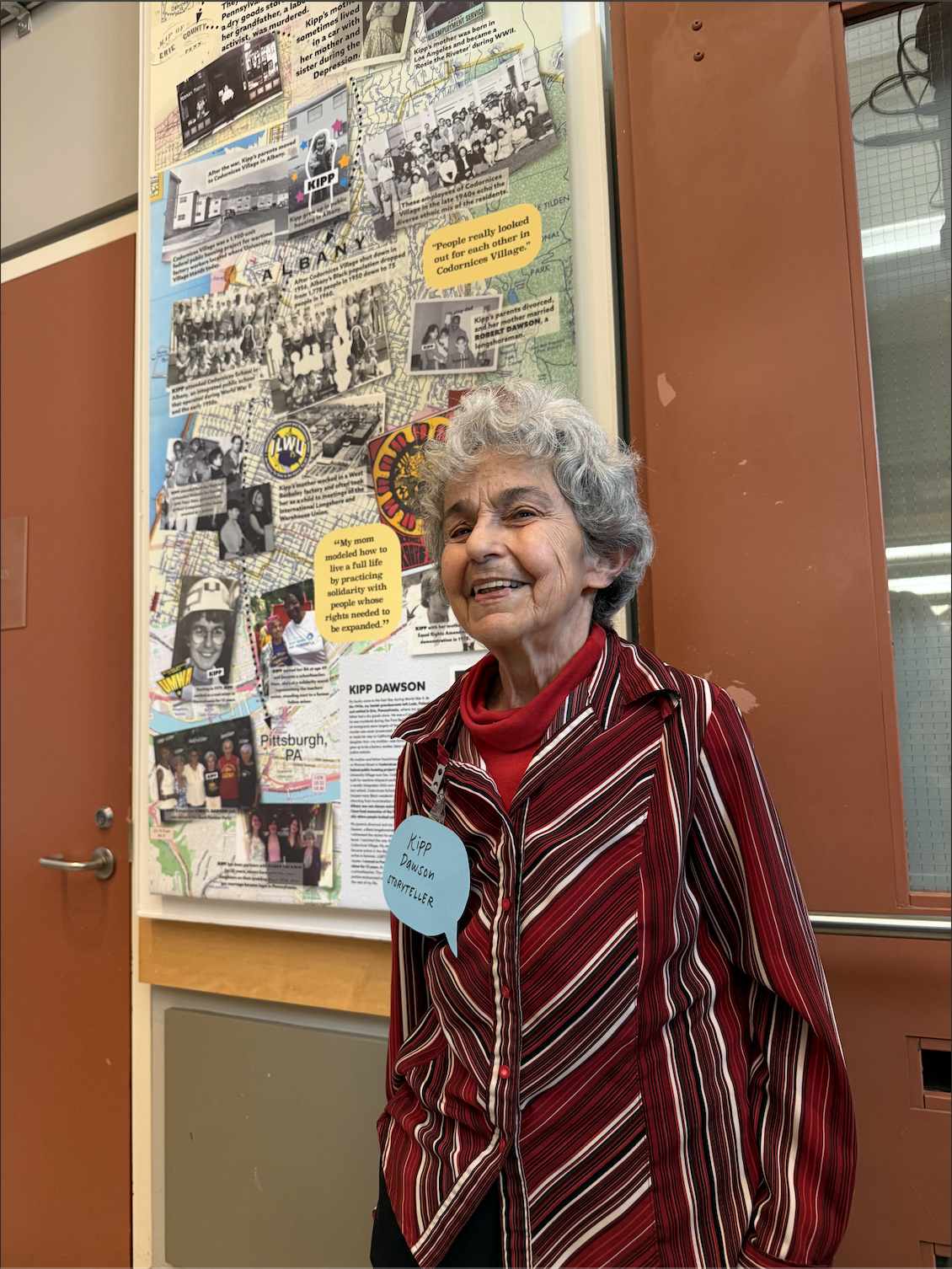
Of many participants who traced their stories of arrival to Albany, seven local families were featured in the exhibition, contributing photographs and personal artifacts that were transformed into large-scale visual collages. Around them hung a collective artwork—Portrait of Albany—reflecting the many migration stories braided together in this place.
Visitors made their own migrations through the Albany Community Center, pointing out places they recognized and people they knew. Sometimes they discovered pieces of their own story in someone else’s.
Like other exhibit visitors, at the exhibit I ran into neighbors I know from completely different corners of daily life. A couple who live down the street. One of the women from the aqua aerobics class I attend at Albany High School. We laughed about barely recognizing each other on dry land, having swapped the pool for the exhibit atrium. But that moment stayed with me. It was a reminder that our migrations aren’t abstract. Every day we are moving along the same sidewalks, classrooms, and community spaces that background our shared story.
The question behind the project
Conversations about migration often unfold at a distance—through policy debates, statistics, and headlines. But every city holds our archive: the stories people carry with them when they move. The choices families make. The risks taken. The hopes they bring with them.
The Path to Belonging project began with a simple invitation: Tell the story of how you got here.
What emerged was not just an exhibition, but a neighborhood conversation about movement, memory, and the ways belonging grows over time.
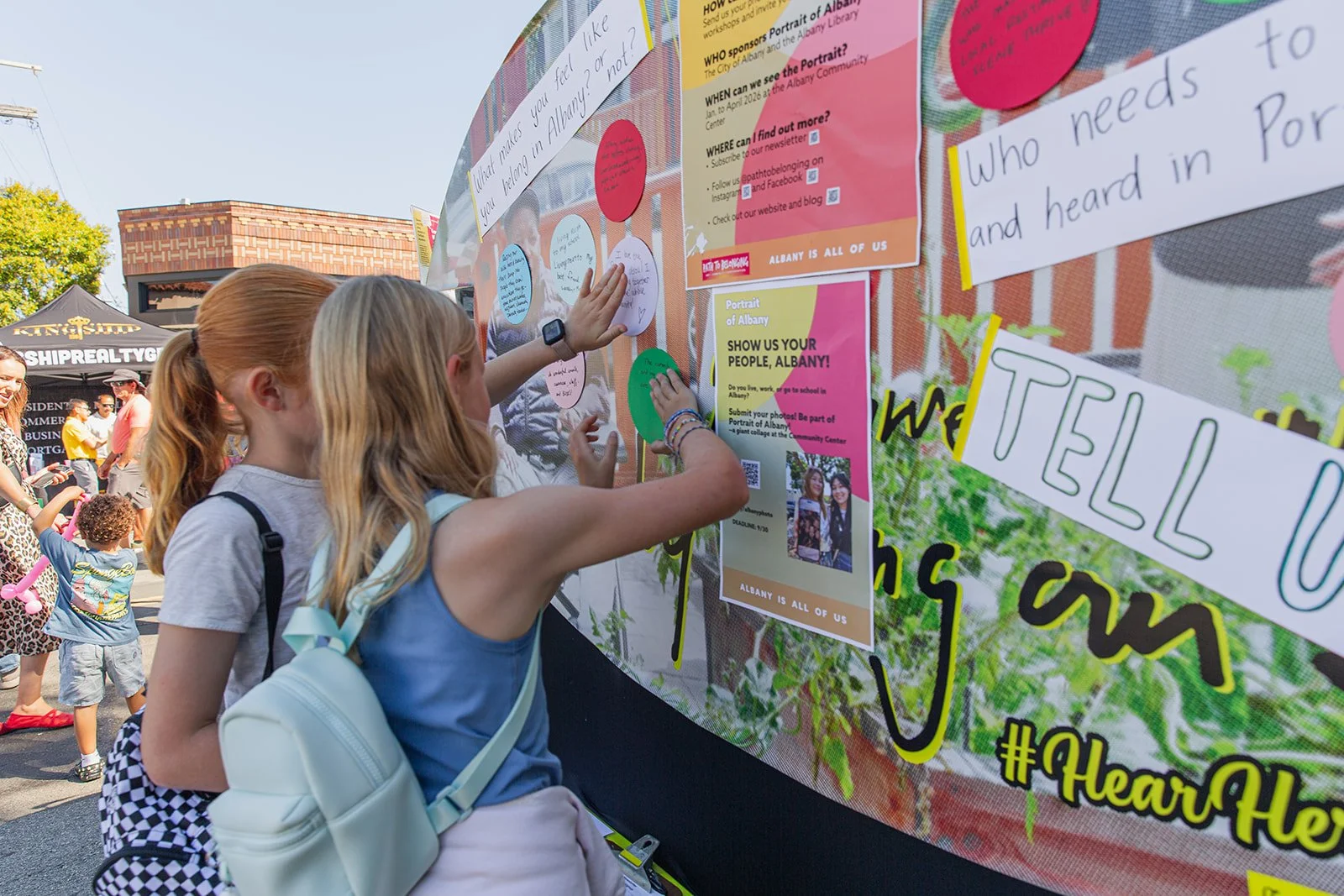
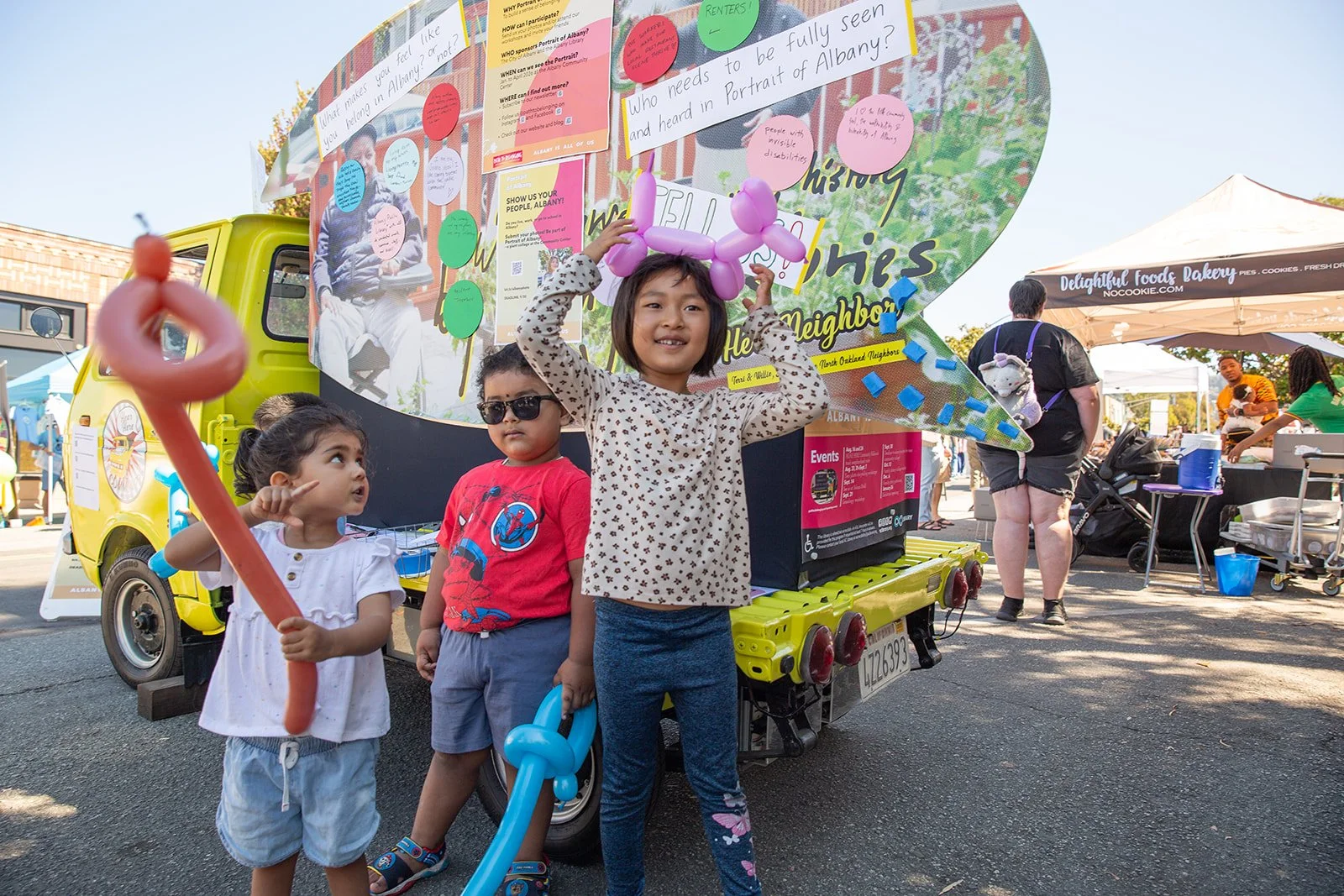
At the Solano Stroll, gathering stories for Journeys to Albany with the Hear Here Truck
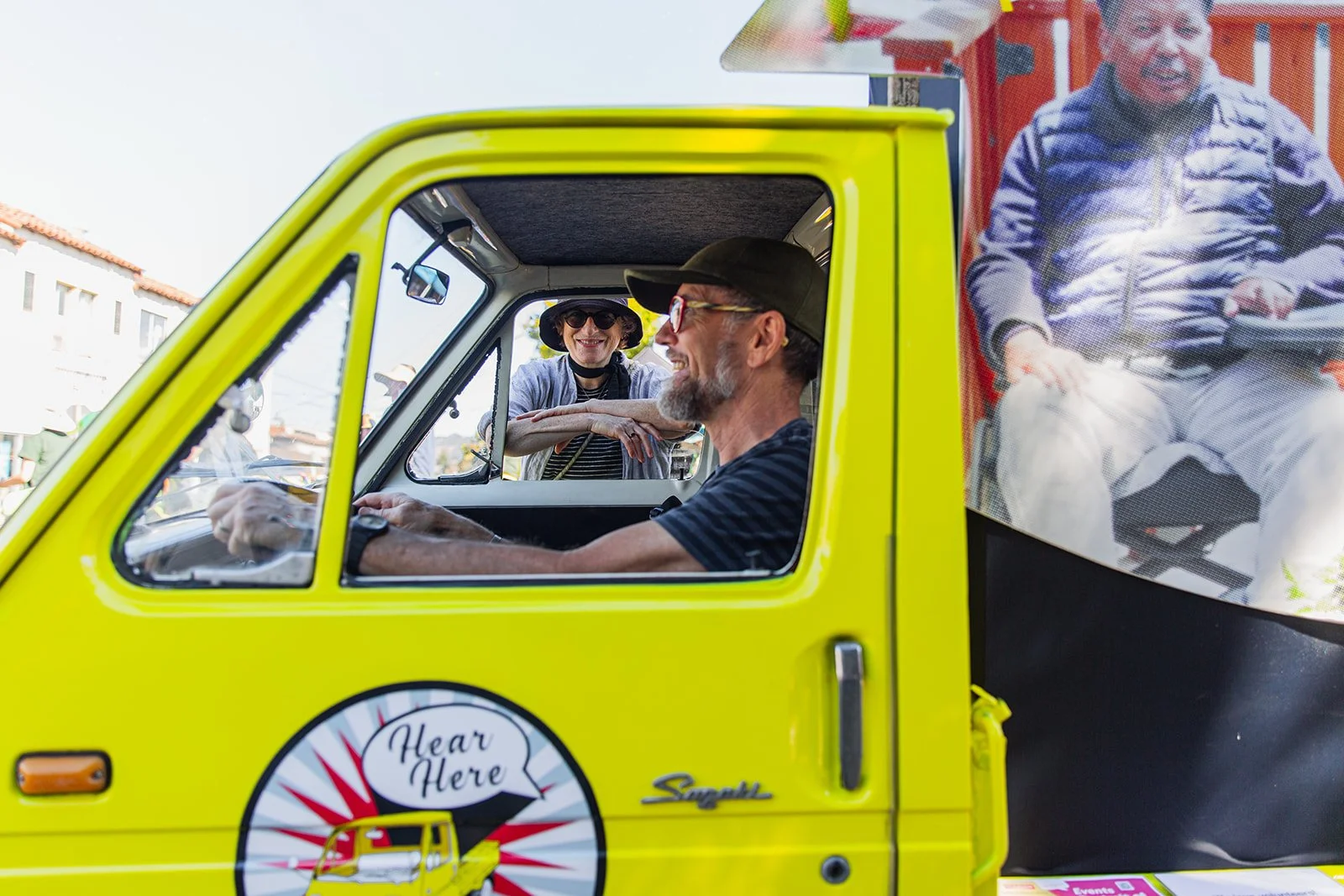
Gathering migration-to-Albany stories with Commons Archive + the Hear Here Billboard Truck
My role
I joined the project as a visual storytelling consultant + documentarian, bringing my background in vernacular migration photographies and participatory narrative work. Much of my practice centers on helping institutions and communities translate lived experience into forms people can encounter—not only intellectually, but relationally.
For Journeys to Albany: Paths to Belonging, my role included:
• helping collect stories and document engagement at the Solano Stroll
• shaping the narrative arc of the exhibition
• supporting participatory storytelling approaches with families
• advising on how visual materials could carry the emotional weight of migration stories
• helping think through how individual stories might be engaged spatially in the community center
In projects like this, the goal is more robust than documentation. The work is to create conditions where people recognize themselves—and one another—inside the story.
Designing for connection
Projects like this rarely emerge fully formed. They require attention to how stories move—from a family conversation, to a shared artifact, to a visual form that can live in public space.
Part of my role was helping shape that movement. Drawing on my background in visual ethnography and narrative strategy, I worked with the project team to consider how individual migration stories could be honored while also building a broader civic narrative about belonging.
That meant paying attention not only to the materials families brought forward—photographs, documents, memories—but also to how those materials would invite visitors into the exhibition itself.
The goal was to create an experience where people could encounter these stories with curiosity and care, and leave with a deeper sense of the many journeys that bring people to a place like Albany, California.
How the work unfolded
The exhibition grew out of a series of community workshops where residents shared photographs, migration documents, and memories. At the invitation extended by Susan Moffat (Path to Belonging) and Sue Mark (Commons Archive, Hear Here Truck), artists and facilitators worked with participating families to transform these materials into visual collages—layered portraits of movement across countries, languages, and generations.
What emerged were stories that stretched across the globe: Vietnam. Mexico. Iran. The American Midwest. The Philippines. And eventually—Albany.
What visitors encountered
One of the pleasures of the exhibition was watching how people moved through the space. Some visitors searched for familiar places on the maps. Others read every. Single. Caption.
Many paused in front of photographs that reminded them of their own family albums. More than once, I heard someone say:“I know them!” That moment—when someone recognizes their own connection to our larger shared history—is the beginning of a different kind of civic conversation.
Why work like this matters
Migration is often discussed in ways that flatten complexity. Participatory storytelling projects like Path to Belonging offer a way for people to encounter migration through memory, relationship, and everyday life.
When communities see their own stories reflected in public space, the texture and meaning of complex stories emerge. People linger and ask questions.They recognize something of themselves in someone else’s history.
Standing in the exhibition, I watched this unfold again and again. A visitor would lean in to study a photograph or handwritten caption, and after a moment they would turn to the person beside them and say something like: “This is my grandma’s story, too.”
These exhibit-catalyzed moments of recognition matter because they create a kind of community oxygen, granting us moments for curiosity to emerge, time for new conversations, a realization that person standing next to us carries a story we haven’t heard yet.
The Journeys to Albany exhibition did something simple and profound: it made visible the journeys already present in this city.
And once those journeys are visible, belonging begins to look less like a fixed identity and more like a practice—something we build together over time, through attention, story, and the everyday act of encountering one another as neighbors.
Impact
Projects like Path to Belonging’s demonstrate how visual storytelling can help communities encounter complex topics—like migration, identity, and belonging—through the lived experiences of their neighbors.
By translating personal histories into shared public narratives, this kind of work creates space for curiosity, recognition, and connection. It allows research, memory, and community knowledge to move out of private spaces and into civic life, where they can shape how people understand the places they live.
For me, this project reflects the larger arc of my work: designing storytelling frameworks that help institutions and communities surface the human stories already present among them—and build more generous conversations about belonging.